Bananas could vanish from US school meals. Here's why [View all]
New Farm Bill places caps on non-US foods; nutritionists say it restricts availability of healthy meals for kids
https://www.theguardian.com/environment/2026/jun/11/farm-bill-school-lunches-non-us-foods
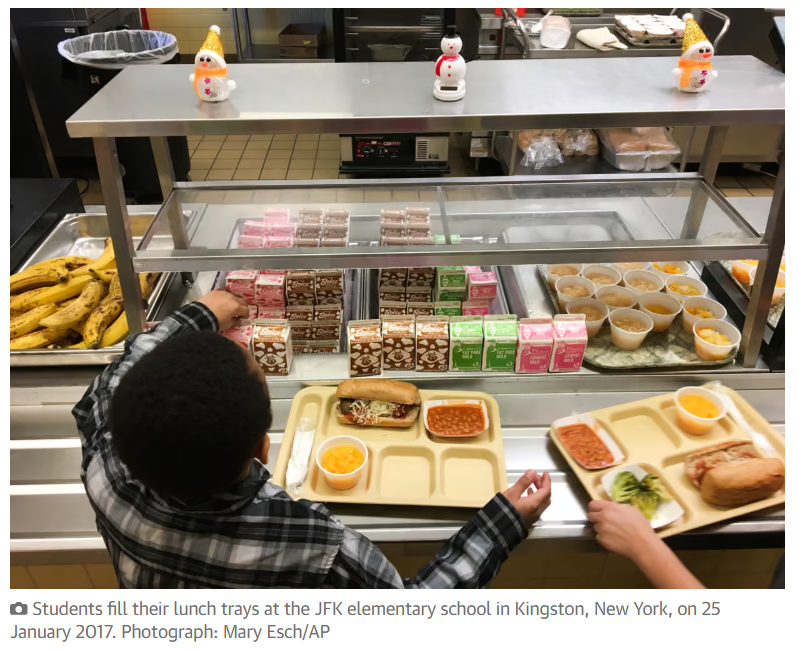
School nutrition workers and advocates have “lots of concerns about bananas”, said Erin Ogden, policy associate for federal child nutrition programs at the Center for Science in the Public Interest (CSPI). Bananas are nutrient-dense foods that many children like. That makes them popular offerings in school cafeterias, since any healthy food that a kid will eat prevents waste and ensures that child isn’t eating either nothing or something less wholesome instead.
“For little kids, they can peel a banana. They can eat a banana if they have braces. Football teams need bananas for the potassium,” said Donna Martin, a school nutrition consultant from Georgia. “But now, school districts are saying, ‘I can’t get you bananas because they’re not American.’” The US is the world’s largest importer of bananas – which only grow in tropical climates – sourcing almost all of the fruit sold in the country from Central and South America.
Jessica Shelley, director of student dining services for Cincinnati public schools, said that next year she will have to remove bananas from her lunch program and cut breakfast servings of them to twice a week.
The Farm Bill, if it passes in its current form, will compel her school system to make these changes. The latest version, passed by the House of Representatives and awaiting response from the Senate, seeks to further curtail purchases of foreign-produced foods.
Restrictions on non-US food purchases for school meals are not new; a
Buy American mandate was added to the National School Lunch Act in 1998. Originally, school food administrators had to buy US products “to the maximum extent possible”, which went undefined for years. Exceptions were made for foods that were
federally listed as “nonavailable” – items relevant to school meals are bananas, mandarin oranges, canned pineapple, coconut and bulk spices. Other exceptions are foreign-sourced foods that cost less than their domestic counterparts,
like fruit juices, some of which are supplied to schools through the
commodities program of the US Department of Agriculture (USDA).
snip

 = new reply since forum marked as read