Lab-grown minibrains will be used as 'biological hardware' to create new biocomputers, scientists pr [View all]
Lab-grown minibrains will be used as 'biological hardware' to create new biocomputers, scientists propose
By Ben Turner published 28 February 2023
A new proposal suggests using stem cell-derived 'minibrains' to create brand-new biocomputers. Such 'organoid computers' could be far off, but ethical questions abound.
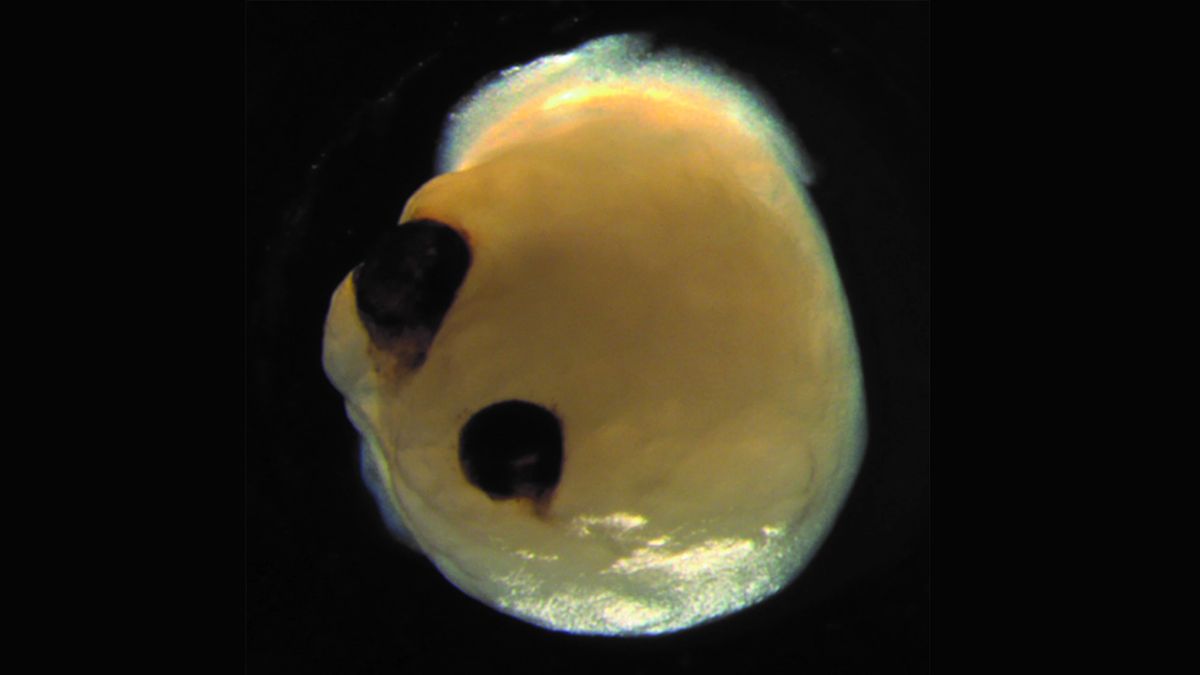
A brain organoid grown with rudimentary optic cups. (Image credit: Elke Gabriel)
Lab-grown "minibrains" could someday be linked together to act as powerful and efficient biocomputers, scientists have suggested.
In a proposal published Feb 28. in the journal Frontiers in Science(opens in new tab), a multidisciplinary group of researchers outlined their plans to transform 3D clumps of human brain cells, called brain organoids, into biological hardware capable of advanced computational tasks — a field they have named "organoid intelligence" (OI).
"While silicon-based computers are certainly better with numbers, brains are better at learning," corresponding author John Hartung(opens in new tab), a professor of microbiology at John Hopkins University, said in a statement(opens in new tab). For example, AlphaGo — the AI that beat the world's top Go player in 2017 — "was trained on data from 160,000 games. A person would have to play five hours a day for more than 175 years to experience these many games."
Brain organoids are small, lab dish-dwelling clumps of stem cells that have been cajoled into 3D structures that mimic the structure and function of the human brain, but are simpler than the full-size organ. First produced in 2013 to investigate microcephaly, a condition in which an infant's head is much smaller than average, the brain blobs have since been used to study diseases such as Alzheimer's, Parkinson's and Zika and to repair injured rat brains with well-placed grafts. And recently, they've even been taught to play the video game Pong.
More:
https://www.livescience.com/lab-grown-minibrains-will-be-used-as-biological-hardware-to-create-new-biocomputers-scientists-propose
👀

 = new reply since forum marked as read