NatIonal Security
With no radical footprint, what drove suspect to try and assassinate Trump?
April 28, 2026 5:05 PM ET
Odette Yousef
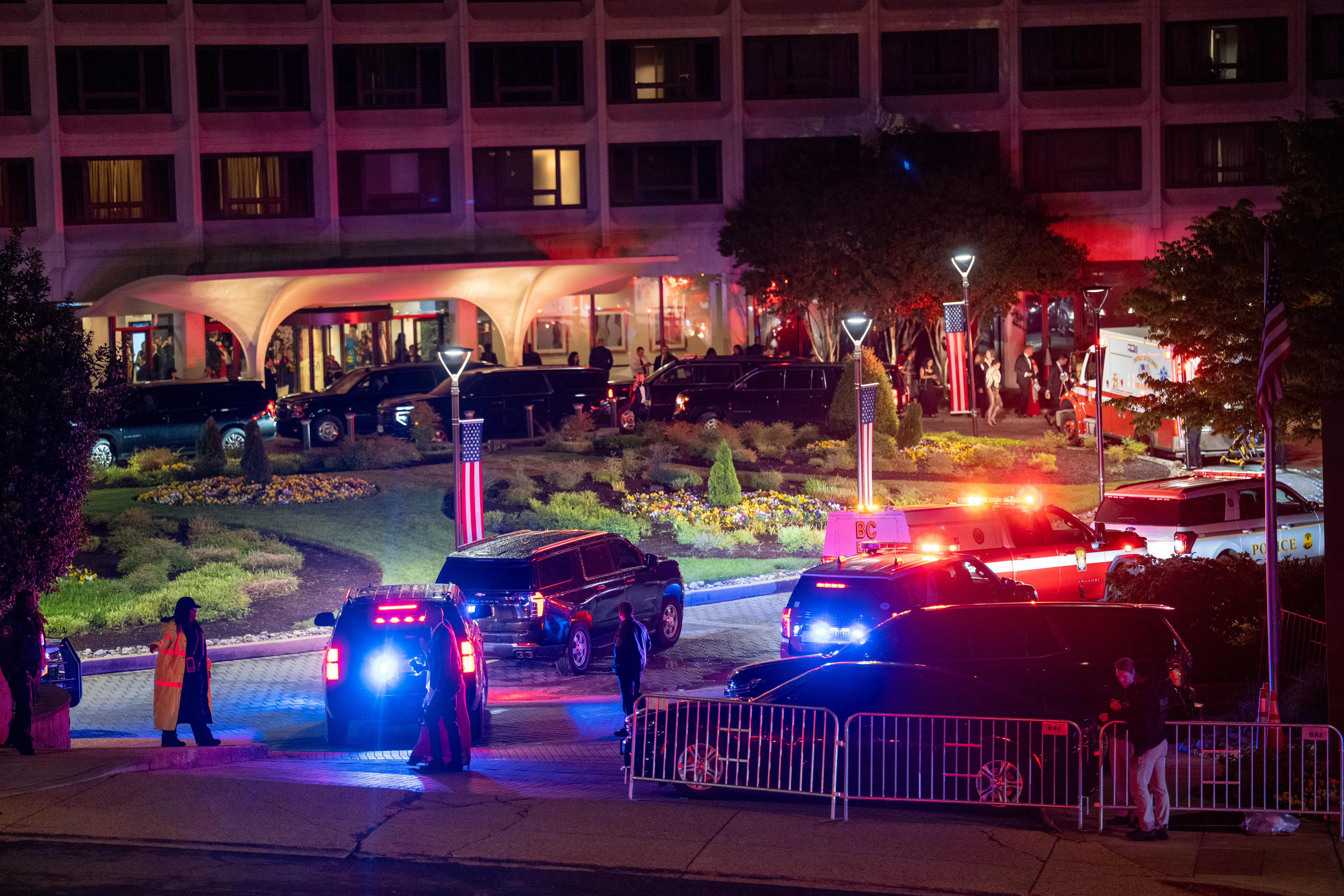
Law enforcement surrounds the Washington Hilton Hotel where shots were fired near the White House Correspondents' Association Dinner featuring President Donald Trump in Washington, D.C., on April 25.
Andrew Leyden/Getty Images
Monday's arraignment of 31-year old Cole Tomas Allen, a California man who is charged with attempting to assassinate President Trump over the weekend, opened legal proceedings that many extremism experts will be watching closely. {snip} The alleged assassination attempt is the latest high-profile data point in a growing environment of political violence in the U.S. over the last decade. While most of that is attributed to the far right,
there is alarm about rising violence from the left. Even amidst this backdrop, however, [Jared Holt, senior researcher at Open Measures, a company that tracks online threats and narratives] and [Cynthia Miller-Idriss, founding director and chief vision officer at the Polarization and Extremism Research and Innovation Lab, or PERIL, at American University] both note that the weekend incident at the Washington Hilton hotel stands out.
For starters, Holt said he's seen no indication that the defendant was steeped in conspiratorial thinking. He said that more typically, people behind acts of violent extremism are nursing grievances fed by false narratives. ... "If you were to just kind of randomly bump into one of these people on the street, you might get the sense that something was a little off," Holt said. "Whereas this seems -- just looking at, you know, this BlueSky profile that's been attributed to the suspect and this document that's been attributed to the suspect – I'm not getting that same kind of read."
In addition, Miller-Idriss said the defendant's presumed writings suggest that he felt personally responsible for not having taken action sooner against the administration. She said they do not appear intended to incite others to take similar action, or to spread a particular ideological message. The tone is one of "defeatism," Miller-Idriss said, which contrasts with a more typical pattern of political violence, particularly from the far right. ... "I don't think you usually see the defeatism on the far right, [which is] more of a mobilization of martyrdom, of wanting attention, of wanting to launch a movement, to be a firestarter, that kind of thing," she said. "This is like a much more hopeless kind of language and rhetoric being used."
Holt said this tone is troubling, not simply because of how it may connect to the violence that Allen is alleged to have been planning. But also because it may signal that on the left, there may be a growing perception that the levers of democracy can no longer work to effect change. ... "That is a bleak point for an individual to get to," Holt said. "But I also think that people are getting to that point now should be cause for reflection for people who work in politics or who work in advocacy, or whatever it may be, that [with] the many problems that we're up against today, there is a subset of the American population that's losing hope and is having a hard time imagining a way out of it."

 = new reply since forum marked as read