Not Left vs. Center, but the People vs. the Powerful [View all]

The flawed study ‘Deciding to Win’ may help Democrats get back to fighting for the forgotten middle class again.
https://prospect.org/2025/12/17/not-left-vs-center-but-people-vs-powerful/

We are digesting a wave of studies on why Democrats lost in 2024 and what they should do now.
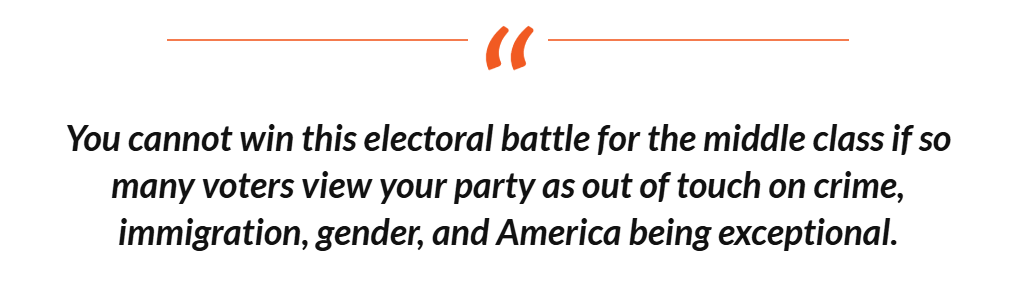
Deciding to Win, by Simon Bazelon, Lauren Harper Pope, and Liam Kerr, argues that Democrats must move to the center to succeed. It’s getting a lot of attention; after all, its findings seemed to be endorsed by Speaker Emerita Nancy Pelosi and my partner, James Carville. So, is the answer to eschew the left, to moderate and move to the center? The study’s authors are right that Democrats have to address their losses with moderate voters, eschew the elite’s identity politics in favor of economic issues, and address fundamental doubts on crime, immigration, gender identity, and American exceptionalism.
But they divide the political world crudely into a bad camp on the “left” and a good one composed of “moderates” and centrists. Their ideological blinders block out results favorable to progressives. Their failure to take account of Donald Trump polarizing our politics leads the authors to misread why Democrats and their strong partisans are prioritizing certain issues. And they just ignore the finding that the most effective candidate is running as an economic populist and battling the wealthy.
Most important, they diagnose the Democrats’ deep problems without any clear ideas on how to fix them. Grabbing the top-testing items in a table or looking at case studies of candidates who ran ahead of other Democrats is unserious. Many postmortem discussions focus on Bill Clinton’s 1992 campaign, which elected a Democratic president at a moment when the Democratic brand was even more toxic. The authors of
Deciding to Win say they were inspired by Elaine Kamarck and Bill Galston’s 1989 report,
The Politics of Evasion. That was a key building block for the intellectual framework offered by the Democratic Leadership Council, which Clinton chaired.
The authors of
Deciding to Win did not interview me or cite my October 1991 review, “
From Crisis to Working Majority,” in
The American Prospect. The review catalogued the Democratic Party’s toxic brand. I wrote about the opportunity to battle for the “forgotten middle class.” Democrats needed to get whole on welfare and crime, respect hard work and responsibility, cut middle-class taxes, advocate for universal social programs, and align with “middle-class America’s deep frustration with the ascendancy of the wealthy and the corporations.” Many looking to a Clinton-esque reinvention of the Democratic Party forget that he ran as an economic populist—but Clinton did not. He read my review three times.
snip

 = new reply since forum marked as read