Welcome to DU!
The truly grassroots left-of-center political community where regular people, not algorithms, drive the discussions and set the standards.
Join the community:
Create a free account
Support DU (and get rid of ads!):
Become a Star Member
Latest Breaking News
Editorials & Other Articles
General Discussion
The DU Lounge
All Forums
Issue Forums
Culture Forums
Alliance Forums
Region Forums
Support Forums
Help & Search
Cooking & Baking
Related: About this forum
The Gold Coast 2: Ghanaian Pantry, Kebabs, & Deep Fries 🌞

The Ghanaian Pantry in North America
To seriously cook Ghanaian food, especially outside of Ghana,
requires stocking one’s kitchen and pantry with a few special
items. While any well-appointed kitchen with stove, oven,
microwave, electric blender or food processor, spice grinder,
pots and pans, etc. will allow you to cook the recipes in this
book the following items are wonderful additions if
available:
• An asanka (for grinding)
• Wooden masher (apotoyewa/apotoriwa or tapoli)
• Wooden stirring stick (much sturdier than standard wooden spoons)
• Cheesecloth (for straining to make beverages, puddings, etc.)
For cooking traditional meals, several pantry items may need to be
ordered online or obtained at an African or international market .
Some of them may also be replaced by more familiar substitutes.
Here are the basics I like to keep on hand, listed by priority:
• Gari (cassava meal) [No substitute]
• Fufu flours (yam, plantain, cocoyam) [Substitutes: Potato starch and
instant mashed potatoes]
• Palm oil (especially spiced dzomi or zomi) [No taste substitute; but
the color red can be duplicated by adding paprika to vegetable oil]
• Dried shrimp/crayfish/herrings (includes smoked and dried, ground
and whole) [Substitute: possibly fish sauce]
• Canned cream of palm fruit [No substitute]
• Dried hibiscus flowers (roselle) [No substitute]
• Agushi (dried melon seeds) [Substitute: Hulled pumpkin seeds]
• Attiéke (cassava couscous) [Substitute: wheat couscous]
• Ground red pepper from Ghana (When “dried ground red pepper” is
listed in this cookbook it refers to regular ground red cayenne pepper
from the U.S. If substituting Ghanaian ground red pepper, reduce amounts by
one-fourth as it is hotter.)
• Hwentia (Xylopica aethiopica) [Substitute: black peppercorns (Piper
guineese)]
• Ashanti pepper [Substitute: whole black peppercorns]
• Stoneground white corn flour
• Toasted corn flour (ablemamu)
• Fonio, African millet, or African millet flour [Substitute: any millet
or flour]
• Koko flour
• Bambara beans [Substitute: garbanzo beans]
• Hausa koko mix
• Dried white corn [Substitute: dried hominy]
• Beef, chicken, shito, and shrimp-flavored Maggi or Royco seasoning
cubes. [Substitute: any seasoning cubes/granules, bouillon cubes, or stock].
Note: I prefer not to use seasoning cubes, and substitute stock or seasoned
salt and other flavorings, as indicated in many of the recipes.
Other staples I like to have in my cupboard that are more easily found
in the U.S. include:
• Adobo or other seasoned salt
• Canned corned beef (Exeter or other)
• Canned Goya sardines in tomato sauce or oil, or other canned fish
• Canned evaporated milk
• Peanut oil
• Dry-roasted unsalted peanuts
• Natural-style creamy peanut butter or “groundnut paste”
• Hulled sesame seeds
• Dried unsweetened flaked coconut
• Canned coconut milk
• Dried black-eyed peas• Dried red pepper flakes
• Hot sauce/condiment (shirachi, sambal oelek, shito, etc.)
• Canned tomatoes
• Tomato paste
• Rice (basmati, jasmine, broken, long-grain, medium grain,
indigenous red, etc.)
• Curry powder or masala
• Dried herbs such as thyme,basil, aniseed, bay leaves
African markets as well as Latin American and Asian markets in the
U.S. are good sources for some fresh produce used in Ghana recipes,
such as fresh African yams (especially puna), small green (apim) or
large ripe plantains, cassava/manioc, cocoyams/taro, various types
of peppers, and garden eggs (a type of eggplant). Other perishable
goods I like to keep on hand are:
• Fresh ginger
• Fresh garlic
• Fresh chili peppers such as habanero (Scotch bonnet), cayenne,
jalapeno
• Fresh tomatoes
• Onions, shallots
• Tropical fruits as available (papaya, pineapple, oranges, lemons,
limes, watermelon, avocado, cantaloupe, etc.)
• Okra
• Spinach or other greens
• Banku dough
• Frozen mango and banana chunks
• Smoked fish
• Margarine or butter (Note: butter is generally not available in
Ghana, so people traditionally use margarine; however, butter may be
substituted in place of margarine in all recipes.
****
Tankora Powder
Tankora powder is a West African rub for meats, poultry, etc.
that is most famously used for West African kebabs. Like
curry powders, it’s a blend of several dried, powdered ingredients.
There are many versions, but most commonly they contain dried
ground red pepper, ginger, some kind of black or white pepper,
salt, peanut powder, and various other spices. Some versions call
for mace, cloves, Maggi cubes, or garlic, and in Ghana people
commonly mix in some toasted corn flour.I recommend going
“all out” and making the rub from scratch. As with a curry powder,
freshly made is best. You can mix and match the ingredients you
happen to like in the quantities you prefer. I usually make this just
before I need it, but it could also be stored in the freezer. In this book
Tankora Powder is used in making Ghana-Style Beef/Liver/Chicken
Kebabs.
Ingredients
½ cup peanut flour
¼ cup toasted corn flour
½ teaspoon dried ground red pepper (or to taste)
1 teaspoon ground dried ginger (or to taste)
½ to 1 teaspoon salt or seasoned salt (or to taste)
Optional: other ingredients as desired, e.g., ½ teaspoon dried
powdered green bell pepper; ¼ teaspoon mace or nutmeg; ½ teaspoon
ground black, white, or Ashanti pepper; shrimp-flavored or other
seasoning cube, crumbled
Directions
Mix all the ingredients together.
One of the best kebabs (called chichinga or tsitsinga) I had in Ghana
was made from tender beef (often chichinga is made from very tough
meats and quite chewy), and the vendor (from the North) told me he
made his own tankora powder that included: white pepper, dried sweet
green pepper powder (the only time I’ve ever heard of that in tankora
powder), dried powdered ginger, ground nutmeg, Maggi and Royco
shrimp seasoning cubes, salt, peanut powder, and dried red pepper.
***************************************************************

Ghana-style Beef Kebabs
Chichinga
Makes 3 to 4 servings
This popular street food, appetizer, and party snack is common
throughout West Africa. Chichinga is usually made from a variety
of protein sources, such as liver or beef (more traditional), chicken
(more contemporary), lamb, or goat. It should be possible to adapt
it to vegetarian choices like mushrooms or tofu as well. The
distinctive taste comes from the rub, the tankora/yaji/chichinga
powder, which includes roasted cornmeal, pulverized and fried and
then re-ground with peanuts, ginger, red pepper, salt, and other
spices. Ghana meats are often tough and chichinga sometimes
taste overcooked to Western sensibilities.
Ingredients
12 ounces tender boneless beef, such as top sirloin
1 cup Tankora Powder (page 24)
2 tablespoons peanut oil
6 to 8 (8-inch long) bamboo skewers, soaked for an hour before using
Marinade
1 to 2 teaspoons tomato paste⅓ to ½ teaspoon dried ground red pepper (or to taste)
½ teaspoon grated fresh ginger
1 or 2 cloves garlic, ground, grated, or crushed
2 tablespoons grated onion
1 teaspoon salt or seasoned salt (e.g., spicy Adobo)
½ teaspoon ground white or black pepper (or to taste)
2 teaspoons peanut or other vegetable oil
Directions
Marinate meat:
1. Mix all the ingredients for the marinade together in a medium
mixing bowl, stirring well.
2. Trim all the fat from the beef and cut into thin strips roughly ¼ inch
thick (you should have about 18 to 21 pieces).
3. Coat the meat evenly with the marinade and refrigerate, covered,
for at least 30 minutes.
Prepare kebabs:
4. When ready to grill the chichinga, preheat a broiler or prepare the
grill. If broiling the kebabs, line a broiler pan or baking sheet with
foil to ease the cleanup.
5. Place a half cup of the tankora powder in a plastic or paper bag.
Add 6 pieces of the marinated meat at a time and shake them well
to coat. Repeat until all meat is coated.
6. Thread 3 pieces of meat onto each skewer. Do not push the pieces
tightly together. Using a pastry brush, lightly brush the kebabs with a little
peanut oil.
Grill or broil kebabs:
7. Place the kebabs about 5 inches from the heat source (under broiler
or on the grill). Turn after about 5 minutes and cook for another 5
minutes, or until they are cooked through.To serve: Chichinga goes
very well with a lager beer (like Club or Star in Ghana), Ginger Beer,
ginger ale, or Hibiscus Iced Tea
.
Variations:
Ghana-style Liver Kebabs
Beef or chicken liver can be prepared the same way, making sure the
liver is completely cooked. The USDA advises an internal heat of 160
degrees F.
*****************************************************************
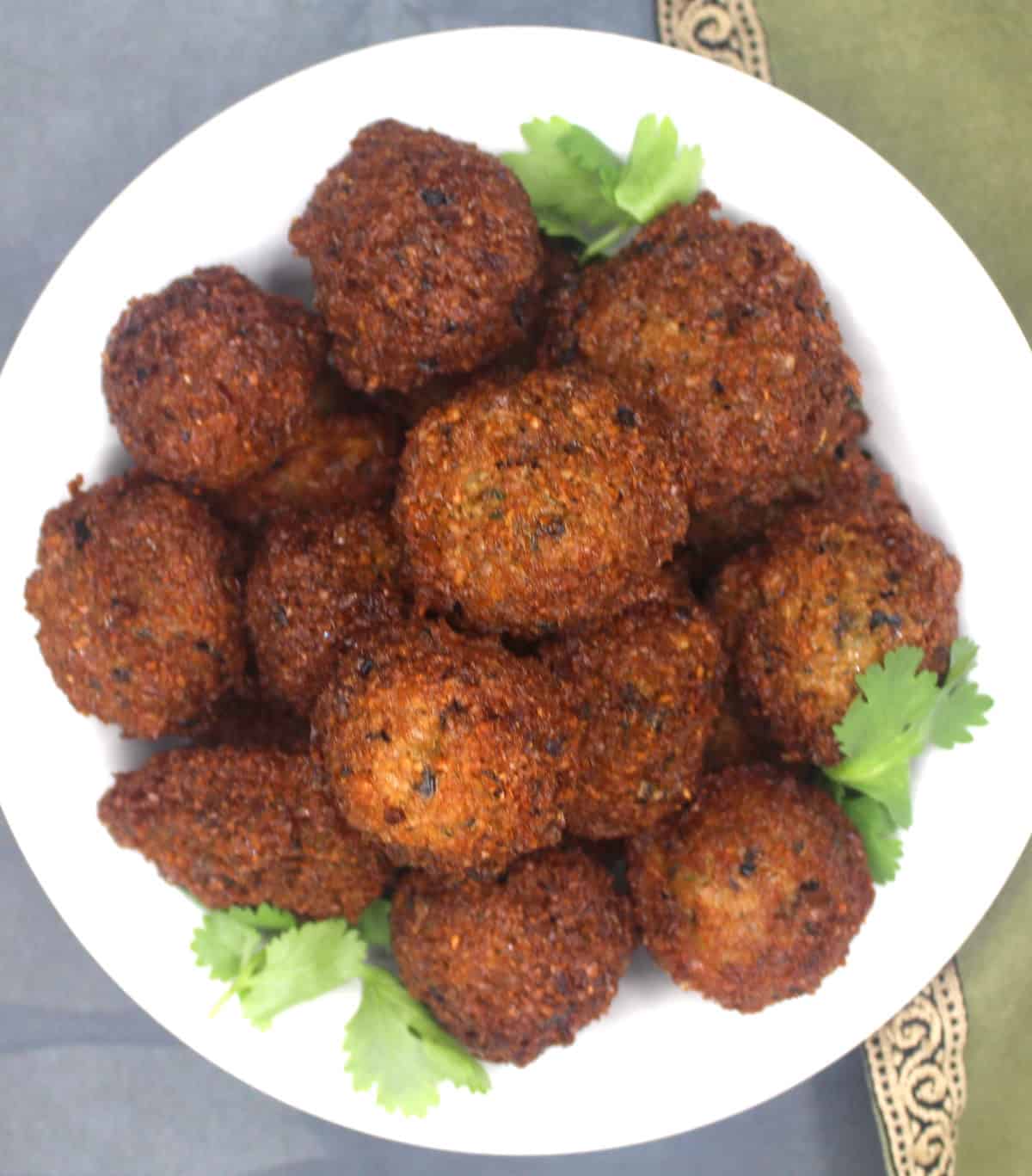
Black-eyed Pea Fritters
Akara
Makes 24 small or 8 to 10 large fritters
Akara (also called accara, akla, kose, koose, kosai) is a hugely popular
West African pea/bean fritter. This dish has many variations.
Ghanaians treasure it and it is also popular in Nigeria. A version that
traveled to Brazil is known as acarajé. In Ghana, akara is commonly
made from black-eyed peas. The initial step is to remove the skins
from the black-eyed peas and grind them. A second option is to use
finely ground black-eyed pea powder. While this may be convenient,
for the best akara, I prefer soaking and dehulling dried black-eyed
peas and grinding them myself. (It is also possible, though less
common, to make the akara without first removing the skins.)
Ingredients
1 cup dried black-eyed peas
½ cup minced or grated onion
3 to 4 teaspoons grated fresh ginger
½ teaspoon salt (or to taste)
½ teaspoon dried ground red pepper (or to taste)
Vegetable oil for deep-frying
Directions
Prepare the fritters:
1. Remove the skins of the black-eyed peas as described on page 25.
While soaking the peas, prepare the other ingredients, and put the oil
into a deep fryer or a large heavy pot. Never fill the fryer or pot more
than half full.
2. After removing the skins of the black-eyed peas, grind half of them
thoroughly in a blender, using up to ¼ cup water and pushing down
the sides with a spatula several times if necessary. This will take
several minutes. Alternatively, grind them in a food processor. Avoid
using any more water than necessary.
3. Empty the first batch into a bowl and repeat the process with the
second half of the beans. When they are fairly well ground, add the
onion, ginger, salt, and ground red pepper, and continue mixing until
the paste is well blended.
4. Empty the bean paste in the blender into the bowl with the first
batch, and whip using a mixer, whisk, or spoon for about 2 minutes
or until air is incorporated into the batter to make it light (mixture
should be a little thicker than egg whites or whipped cream).
Fry the fritters:
5. Preheat the oil. If using a deep fryer, set the temperature to 350 to
360 degrees F. When using a heavy pot on my electric stove, I need
to alternate between a medium-high and high heat as the batter is
added and removed.
6. Depending on the size of akara desired, choose a long-handled
spoon for putting the batter in the oil: a teaspoon size for tiny
fritters, a tablespoon or serving spoon size for larger fritters. Dip
the spoon into the oil to coat it, then dip it into the paste and scoop
out some batter. Quickly use another spoon to carefully slip the batter
off into the oil. Repeat until the fryer or pot is filled but not crowded.
7. If the fritters do not turn over by themselves, turn them over
halfway through cooking time. Cooking time depends on the size
of the fritters, but it will take several minutes until they are nicely
browned.
8. Remove fritters with a slotted spoon as they brown and drain them
on paper towels to cool and absorb extra oil. After cooling the first
batch, break open a fritter to confirm that it is fully cooked, and adjust
the temperature of the oil if necessary for cooking the remaining
dough. To serve: The fritters can be eaten warm or at room
temperature, alone or with a dip. Bite-size fritters may be served with
toothpicks and a hot sauce and/or version of a peanut sauce as a
party appetizer. In Ghana, larger fritters are classically served with
porridge for breakfast, or eaten as a snack.
Troubleshooting:
If the fritters sink to the bottom of the pan, the oil is not hot enough;
if they brown immediately without having time to cook through to the
center, the oil is too hot.
*******************************************************************
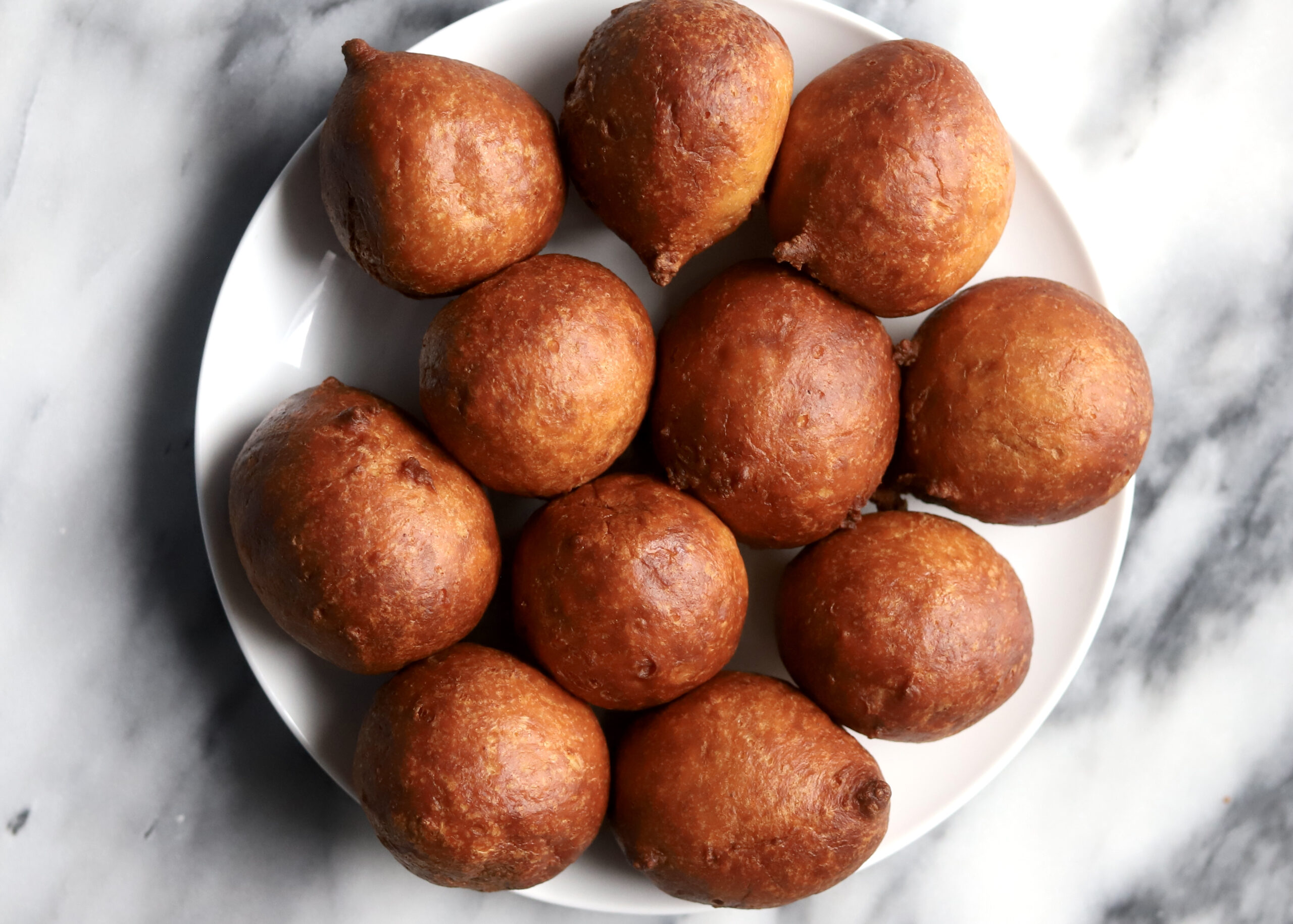
Ghana Wine-Raised Doughnuts
Togbei / Bofrot
Makes 12 to 18 doughnuts
When I lived in Nungua along Ghana’s coast in the 1970s I became
attached to a chewy doughnut that the Ga people call Togbei, which
delightfully enough means “goat’s balls.” The Akan people call it Bofrot
(roughly pronounced “boff-row”). They are a popular street food. I
remember buying them by the roadside in Nungua, freshly made and
wrapped in newspaper. They make a nice snack with tea.
The doughnuts are made from a raised wheat dough that traditionally
uses palm wine in place of yeast. The palm wine gives them a
distinctive taste, but as palm wine is not available outside Ghana,
yeast and/or dry white wine may substitute. Some people claim
unpasteurized beer or lemon juice in evaporated milk can also
replace the palm wine.
In contemporary Ghana, people also make a version of Bofrot that is a
larger cousin to North America’s cake “donut holes,” substituting
baking powder for the yeast/palm wine . Try that recipe if you are
pressed for time. This recipe for the traditional chewy type can be
doubled, tripled, quadrupled, etc. to make large batches.
Ingredients
⅓ cup warm water
3 tablespoons dry white wine or water, warmed
3 tablespoons plus 1 teaspoon sugar
1 teaspoon yeast (rapid rise or regular)
1 egg
½ cup plus ⅓ cup unsifted bread flour
¼ teaspoon ground nutmeg
⅛ teaspoon baking powder
Pinch of salt
Vegetable oil for deep frying
Directions
Make the dough:
1. Pour warm water and wine, if using, into a large bowl, and stir in
the sugar to dissolve. Sprinkle in the yeast and let it sit for a few
minutes to allow the mixture to begin to bubble.
2. Beat the egg, put it in a measuring cup and measure out one-third of
it (this recipe uses awkward measurements, but they work). Once the
yeast begins to foam, add the one-third of the egg and mix.
3. Gradually pour the flour through a strainer into the liquid, mixing
well. Stir in the nutmeg, baking powder, and salt. Mix all together well,
cover the bowl with a cloth and allow it to sit in a warm place for at
least 2 hours. The dough should at least double in size, so make sure
your bowl is large enough to accommodate.
Fry the doughnuts:
4. When ready to fry the bofrot, heat oil to 375 degrees F in a deep
fryer or large heavy pot (only fill pot half full). Line a colander with
paper towels.
5. In Ghana, experienced chefs efficiently and quickly scoop up the
batter in the hollow of their right hand and drop it into the oil in a
perfect ball. For the rest of us, dip a long-handled soup spoon in the
oil to coat, then scoop up a spoonful of the dough and slide it off
the spoon into the oil with another spoon (also dipped in oil first).
You can fry a few doughnuts at a time but be sure not to over-crowd
the pot. Ensure the doughnuts cook evenly on all sides, turning them
over as necessary. When they are dark (a bit darker than you would
probably think they need to be) remove them to drain the excess oil
in the paper-towel-lined colander.
To serve: These are delicious at breakfast or as a snack with tea
or coffee: chewy and less sweet than most American doughnuts.
Troubleshooting:
If the balls of dough flatten out, there is likely too much liquid in the
batter—try adding a little more flour.
If they sink to the bottom, the oil is not hot enough.
If they brown on the outside but do not cook on the inside, the oil is
too hot.
***************************************************************

Ghana Cake Doughnuts
Togbei / Bofrot
Makes 12 to 18 doughnuts
This recipe is adapted from one used by Barbara at Flair. These
are faster to make, with a different texture from the wine-raised
version (see above)—more coarse and crisp, just as a muffin
differs from a regular slice of bread. Either way is tasty.
Ingredients
1 cup unsifted bread flour
Rounded ¼ teaspoon salt
3 tablespoons margarine or butter
3 tablespoons sugar
½ teaspoon ground nutmeg
Rounded ½ teaspoon baking powder
1 egg
¼ cup evaporated milk plus ½ cup water, or ¾ cup regular milk
½ teaspoon vanilla extract
Vegetable oil for deep-frying
Directions
Make the batter:
1. Sift the flour and salt into a bowl, and cut in the margarine
or butter (use your hands or 2 table knives) until the mixture
resembles cornmeal.Stir in the sugar, nutmeg, and baking
powder.
2. In a separate bowl, beat the egg, then add the milk (and
water, if using), and vanilla extract and mix well. Make a hole
in the center of the flour mixture and add the liquids all at
once, blending with just a few swift strokes to keep the batter
from becoming tough. Let the batter sit for 30 minutes.
Fry the doughnuts:
3. Line a colander with paper towels to drain the bofrot after cooking
them.
4. About 10 minutes before the 30 minutes are over, heat
vegetable oil in a deep fryer or deep, heavy pan to 360 to
375 degrees F. (Do not fill the pan with oil more than half
full.) Do a temperature test: when the oil is hot enough,
a small amount of dough dropped into the oil will quickly
rise to the surface.
5. The doughnuts are usually prepared larger than a golf
ball but a little smaller than a tennis ball. When the oil is hot,
slip a long-handled spoon into the oil to coat it, then scoop
up a spoonful of batter. Using another spoon (also coated
with oil) quickly slide dough into the oil. Cook the doughnuts
in batches until they are quite browned on all sides. They will
likely turn over as they cook, but use a long-handled slotted
spoon to stir and turn them as necessary.
6. Use the slotted spoon to lift them out into the paper
towel-lined colander to absorb the extra oil and cool. They
can be eaten warm or at room temperature.
Troubleshooting:
The dough should be shaped like a ball. If it flattens out
there is likely too much liquid in the batter—try adding a
little flour to the dough.
Welcome dear taste buds again, to the Gold Coast! Much more to come!
