Environment & Energy
Related: About this forumThis Canadian Mine Might Release Enough Natural Hydrogen Each Year to Power 400 Homes, Hinting at an Untapped Source of
This Canadian Mine Might Release Enough Natural Hydrogen Each Year to Power 400 Homes, Hinting at an Untapped Source of Clean EnergyMany of the country’s metal mines are embedded in an ancient rock formation that probably also houses a lot of the resource, referred to as “white hydrogen”
Margherita Bassi | Daily Correspondent
May 21, 2026 10:00 a.m.
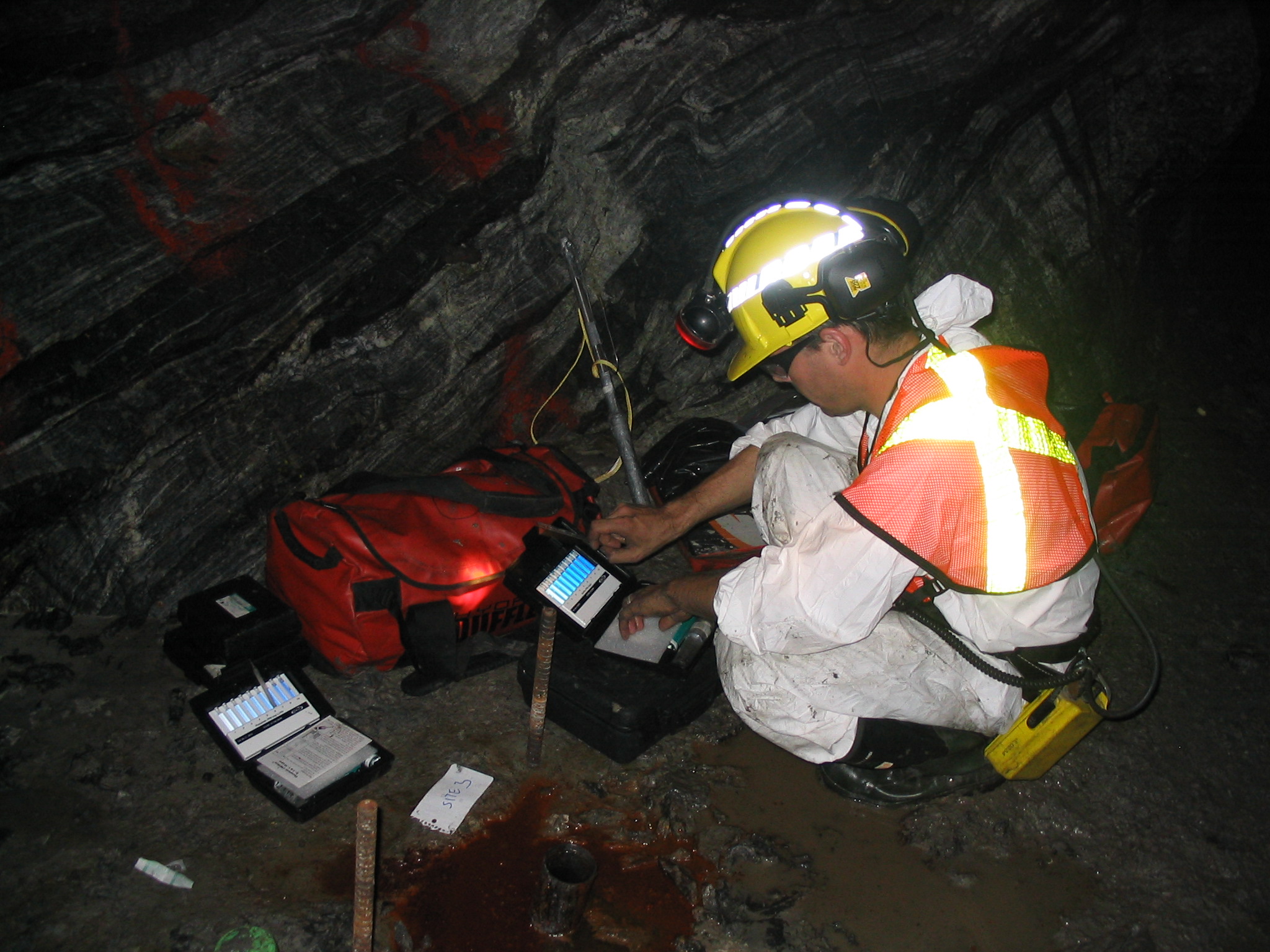
Researchers collected groundwater in boreholes up to 1.8 miles underground. The water contains dissolved natural hydrogen. Barbara Sherwood Lollar
Hydrogen is the most abundant element in the universe. We commonly use it to manufacture fertilizer and to make certain foods shelf-stable, among other applications. What’s more, the element doesn’t produce planet-warming greenhouse gases when burned, so it’s considered a tantalizing source of “clean energy.”
But humans are currently generating most of our hydrogen from fossil fuels; we release roughly one billion U.S. tons of carbon dioxide to create 107 million U.S. tons of the sought-after substance. Hydrogen can be produced from renewable energy sources, too, but the process is often costly.
The Earth creates its own natural hydrogen, called “white hydrogen,” via chemical reactions in the crust. Now, using data collected at a metal mine in Ontario, Canada, for over a decade, researchers have found that the site annually discharges enough hydrogen to power more than 400 households each year.
More than 70 percent of the continental crust can potentially produce hydrogen, so accessing the rock layer via mines might be a way to obtain a substantial amount of the element, according to a study published May 18 in the journal Proceedings of the National Academy of Sciences.
More:
https://www.smithsonianmag.com/smart-news/this-canadian-mine-might-release-enough-natural-hydrogen-each-year-to-power-400-homes-hinting-at-an-untapped-source-of-clean-energy-180988773/
 = new reply since forum marked as read
Highlight:
NoneDon't highlight anything
5 newestHighlight 5 most recent replies
= new reply since forum marked as read
Highlight:
NoneDon't highlight anything
5 newestHighlight 5 most recent replies

DemocracyForever
(197 posts)that sounds promising. A couple of years ago, an underground reserve of hydrogen gas was also found that is 26 times the size of the remaining crude oil reserve. If humanity can only access part of this underground hydrogen reserve, it'll be enough clean energy to power humanity for 200 years. My engineer father firmly believed that green hydrogen is the energy solution. This is further proof that he was right.

OKIsItJustMe
(22,175 posts)“Brown" or “Black” Hydrogen: Produced using coal. (Ick!)
“Grey” hydrogen: Produced using natural gas (Not as bad as coal, still…)
“Blue” hydrogen: Produced using natural gas, supposedly capturing the CO₂.
“Pink” hydrogen: Produced from water using nuclear power.
“Green” hydrogen: (Typically) produced from water using renewable power (PV, Wind…)
“White” hydrogen: “Natural” or “Geologic” hydrogen. (Might be produced by drilling wells, like natural gas wells.)
(This story is about “White" hydrogen.)
DemocracyForever
(197 posts)No fossil fuels are used to produce this form of hydrogen. This is what makes it a green source. Also, the only by-product from burning green hydrogen is water and not the planet killing greenhouse gases. My father was an engineer and a member of the Society of Automotive Engineers so this issue was part of my childhood. My engineer father firmly believed that green hydrogen is the solution to getting the world to stop burning the planet killing fossil fuels. Green sources of hydrogen are now being found in enough quantities to make this a reality.
OKIsItJustMe
(22,175 posts)However, “green hydrogen" (in the accepted usage) typically refers to hydrogen artificially produced using renewable energy.
In contrast to “green hydrogen” this “white hydrogen" is naturally occurring.
DemocracyForever
(197 posts)Green energy is an overall term that refers to energy that doesn't involve fossil fuels and won't poison our planet whether it's naturally occurring or created from other renewable sources of energy. This issue was part of my childhood thanks to my engineer father who well understood the issue. Just curious, are you an engineer?
OKIsItJustMe
(22,175 posts)Before leaving my job, I mentored a young PhD-wielding mechanical engineer (now acting chair of the mechanical engineering department at the local community college.)
DemocracyForever
(197 posts)more than 40 years of aviation and automotive engineering work experience including 40 years of both military and commercial filing experience which meant he had extensive knowledge of the weather. In addition, my father was also a long time member of the Society of Automotive Engineers. I consider myself very lucky to have been raised by someone who was a genuine expert on what is clearly the biggest threat humanity faces, human caused climate change. My engineer father knew exactly how every aviation and automotive fuel and oils were formulated and the damage that they're doing to our planet. My engineer father was convinced that "green" hydrogen was the solution because he understood that the world must stop burning fossil fuels.
OKIsItJustMe
(22,175 posts)Your father was most likely talking about hydrogen generated by splitting water using electrolysis, powered by renewable energy. That’s the usual definition of “green hydrogen."
Really, up until a few years ago, the very idea that useful amounts of naturally occurring hydrogen (as described in this story) could be recovered was thought to be nothing more than a fantasy. That’s what makes this story newsworthy. (As my electrical engineer brother used to say, “Unless you can point to great gouts of hydrogen stored underground, hydrogen will never be a viable fuel.)
When I drew this story to my brother’s attention, his reaction was, “Good! It’s in Canada! I may only hear the explosion.” — He had built hydrogen leak detectors for an “accelerator" facility.
Hydrogen is a tricky element, it’s so small it can leak out of joints more easily than other gases or fluids. It’s also so small, that it can sneak into metals, causing them to become brittle (known as “hydrogen embrittlement.”) This makes it challenging, but I don’t believe the challenges are insurmountable. NASA for example has been working with hydrogen since before it existed. (Early hydrogen-powered rockets were built by a NASA predecessor, NACA.) The Saturn V’s upper stages were powered by hydrogen and oxygen. (The explosion on Apollo 13 was not caused by hydrogen, it occurred in a liquid oxygen tank.) The Challenger’s hydrogen tank exploded, but it was ignited by a leak in one of the solid rocket boosters. — Still, it stands as a dramatic demonstration that hydrogen can (potentially) be dangerous.
I think that “green hydrogen” and/or fuels made with “green hydrogen” (like “green ammonia”) will play a role in our future energy system, but it is not “the solution."
OKIsItJustMe
(22,175 posts)
Judi Lynn
(164,173 posts)
OKIsItJustMe
(22,175 posts)

NNadir
(38,584 posts)...for future generations. This will ensure that among other things that we like to do them, they will have fewer resources, and - as the combustion product is water - even faster rising seas, and maybe even depleted oxygen levels to go with all the carbon dioxide we're leaving them.
They're not our problem, those future generations, and anyway, we fully expect them to do all the things we couldn't do ourselves, "by 2050," or "by 2100" to be totally "green," and if they don't do what we couldn't do ourselves, they can just screw off.
It's not like we should leave any resources for the future - although this is not really much of a resource.
The "home" by the way, is not a unit of energy, except among journalists, an indicator that one cannot get a degree in journalism if one has passed a science course with a grade of C or better.
The unit of energy is the Joule, a derived unit based on the SI units of mass, length and time.
There are zero hydrogen schemes of any of the stupid colors people attach to the sources, that are sustainable.
Zero.