Finding Stillness in Minnesota's Boundary Waters in the Age of Trump
By Alex Kotlowitz
July 17, 2019
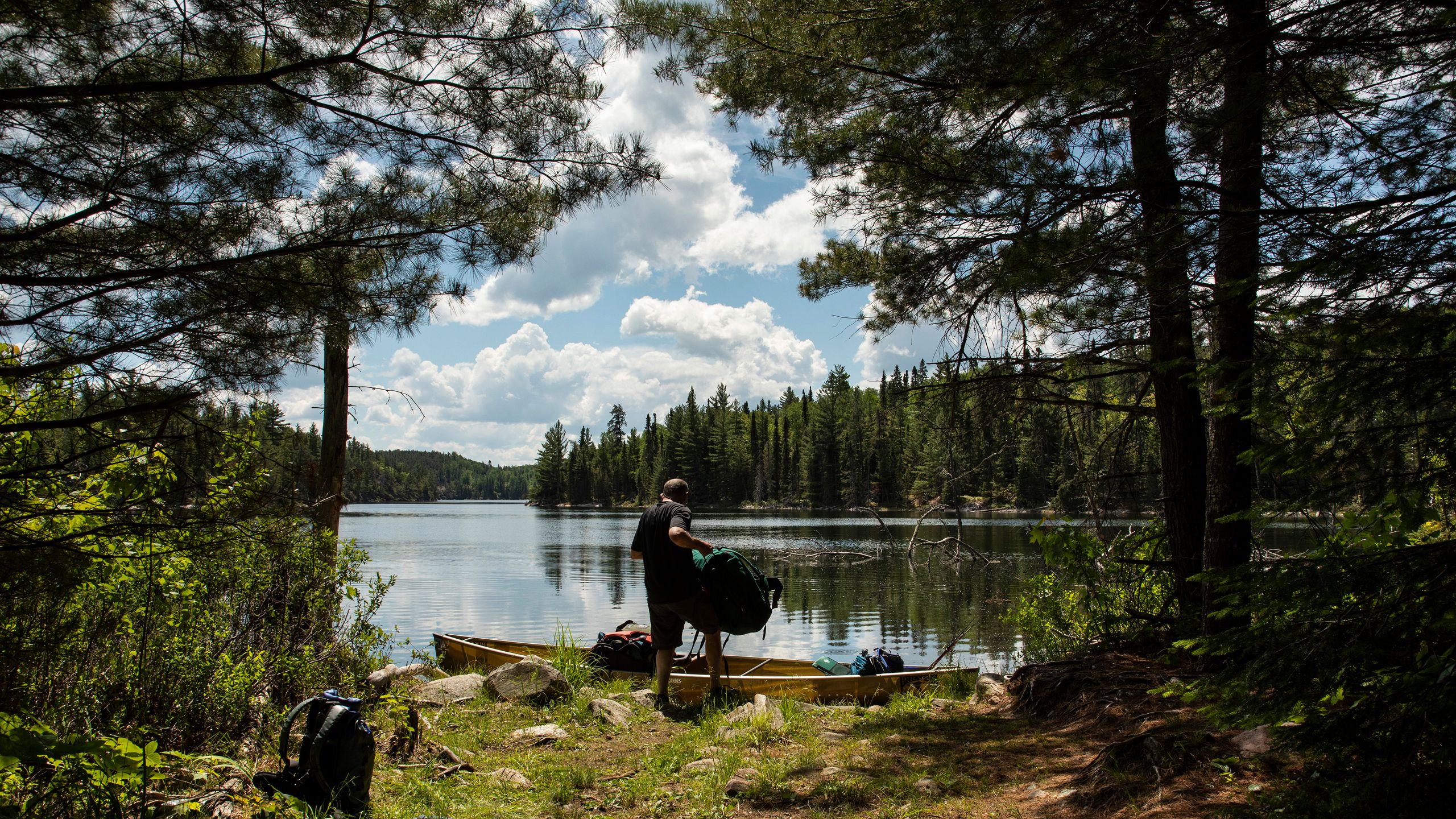
Trump is about to allow a Chilean company (friend of Jared and Ivanka) to mine for copper in the BWCA.
The Boundary Waters Canoe Area Wilderness (BWCAW) is a 1-million-acre protected wilderness in northeastern Minnesota's Superior National Forest, renowned for its extensive interconnected lakes, pristine boreal forests, and rugged glaciated terrain. It offers over 1,200 miles of canoe routes and 2,000+ campsites, primarily accessed by paddling and portaging
In the summer of 2014, Thomas Tidwell, who had worked for the U.S. Forest Service for thirty-seven years, the last five of those as its chief, decided to visit the Boundary Waters Canoe Area Wilderness, a mosaic of more than a thousand lakes and rivers on almost 1.1 million acres in northern Minnesota, along the Canadian border.
A Chilean company, Antofagasta, had asked to renew two leases on land very near the wilderness area, where the firm intended to mine for copper. The U.S. Forest Service, which was later given the authority to grant or deny the request, would hold hearings and look at scientific data, both about the watershed and the kind of mining proposed. But Tidwell wanted to see the area for himself. That summer, in a Beaver float plane typically used for search and rescue, Tidwell became one of the few people to observe the B.W.C.A.W. from the air.
In 1949, President Truman signed an executive order prohibiting all private and commercial aircraft from flying below four thousand feet over the area. Tidwell had grown up in Idaho and spent much of his career in the West; he was familiar with places like the Bob Marshall Wilderness and Utah’s Wasatch-Cache National Forest, but what he saw from the air over the B.W.C.A.W.s left him awestruck. “I couldn’t believe the beauty of the area,” he told me. “And how much water there was. It gave me this sense of wonder—a place where you could get away from everything.”
https://archive.ph/WhxVp
 = new reply since forum marked as read
