Why the Supreme Court Is Debating Which Founding Fathers Were Drunks
The court’s docket increasingly features bizarre historical arguments; ‘John Adams took a tankard of hard cider with his breakfast.’
https://www.wsj.com/us-news/law/supreme-court-session-cases-originalism-birthright-citizenship-second-amendment-c858a23e
https://archive.ph/QRqN5
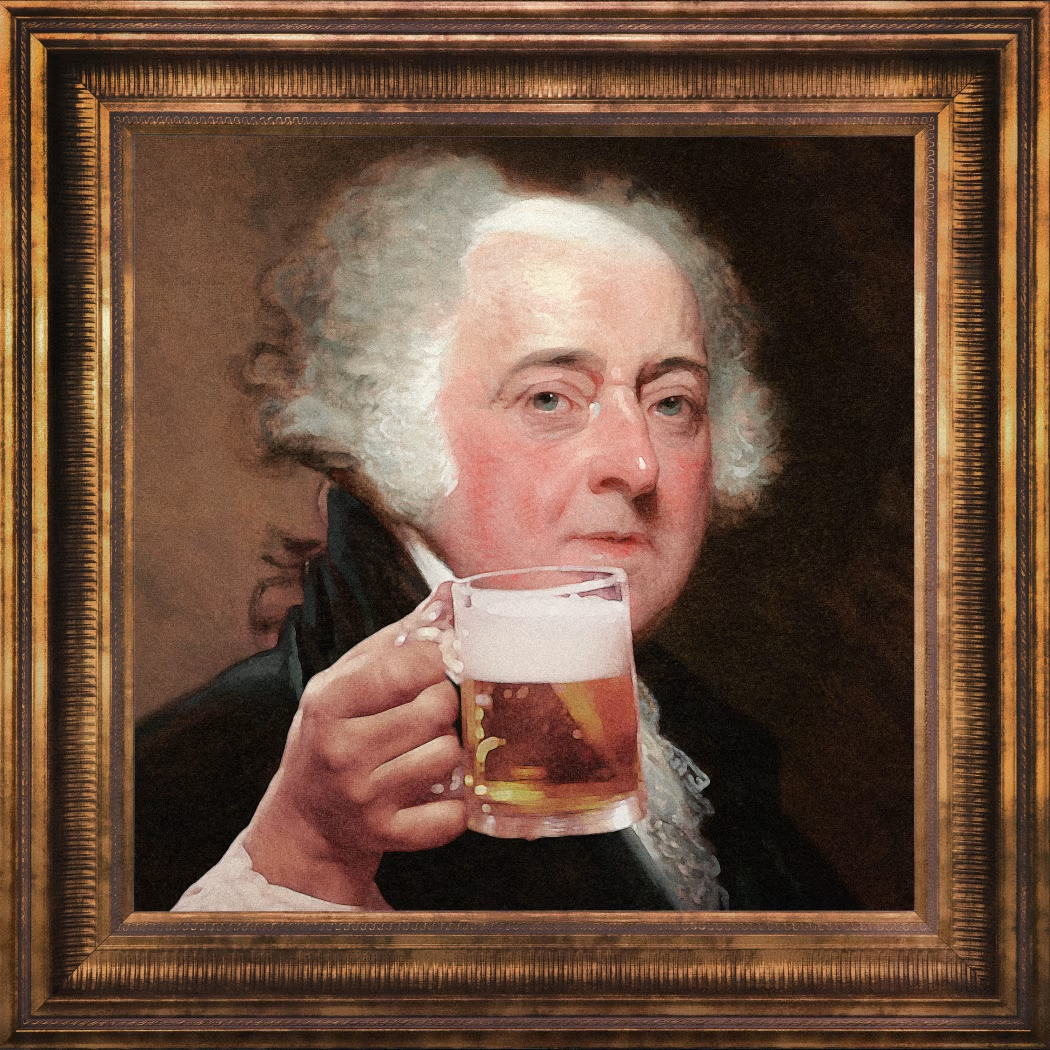
Do drug users have a constitutional right to own a gun? The answer may depend on what the Supreme Court thinks about the drinking habits of the Founding Fathers. Can states count mail-in ballots that are postmarked on time but arrive after Election Day? That may turn on a long-forgotten voting practice from the Civil War.
As the Supreme Court works through its busiest month, its docket is chockablock with tough cases on modern-day problems. More than ever, the justices are looking deep into the past for answers. The time machine is driven by the ascendance of originalism—the legal philosophy, pioneered by conservatives, that says the meaning of the Constitution’s words shouldn’t evolve over time.
Though the theory has been fashionable for decades, the court’s conservative supermajority has embraced it with new fervor, sending attorneys scrambling for historical nuggets that once were more useful for Trivial Pursuit. “The more this form of analysis gets extended, the stranger it becomes,” said Jonathan Gienapp, law and history professor at Stanford and a critic of originalism. “It’s not obvious what from the past matters, and what doesn’t.”
Second Amendment cases are at the forefront of lawyers’ efforts to amass historical ammunition. That’s thanks to a 2022 Supreme Court ruling that significantly expanded the right to carry a gun. The court decreed that today’s gun regulations are constitutional only if they are consistent with early American historical traditions. Since then, lawyers across the country
have argued over what those traditions are. One dispute, pending before the justices, challenges a federal law that
prohibits people who use illegal drugs from possessing firearms.
snip

 = new reply since forum marked as read
